A tattoo can represent a meaningful chapter of your life, but that doesn’t mean you’ll always want to carry it on your skin. Maybe the design no longer reflects your personality, the artwork didn’t turn out as expected, or you’ve simply decided it’s time for something different. Whatever the reason, changing your mind is perfectly natural.
Fortunately, laser tattoo removal offers a way to fade or potentially remove unwanted ink without surgically cutting out the tattooed skin. Modern laser technology targets tattoo pigment beneath the surface, allowing your body’s natural processes to gradually clear the fragmented particles.
But how does the process actually work, and how many appointments will you need before noticing a difference? The answer depends on more than the tattoo’s size. Continue reading to understand the science, treatment timeline, and factors that influence your results.
How Laser Tattoo Removal Works and What to Expect
Tattoo removal isn’t an instant erasing process. It involves carefully delivered laser energy, your body’s response to fragmented pigment, and a series of treatments planned around your tattoo’s characteristics.
1. Laser Energy Targets Tattoo Pigment
When you get a tattoo, a needle deposits ink into the dermis, the layer of skin beneath the epidermis. Unlike temporary markings that sit on the surface, tattoo pigment remains embedded within the skin. Some particles are held inside cells, while others remain within surrounding tissue.
That’s why ordinary washing, exfoliating, and skincare products can’t remove a permanent tattoo. Laser tattoo removal works differently. The treatment delivers short pulses of concentrated light that interact with pigment particles beneath the skin.
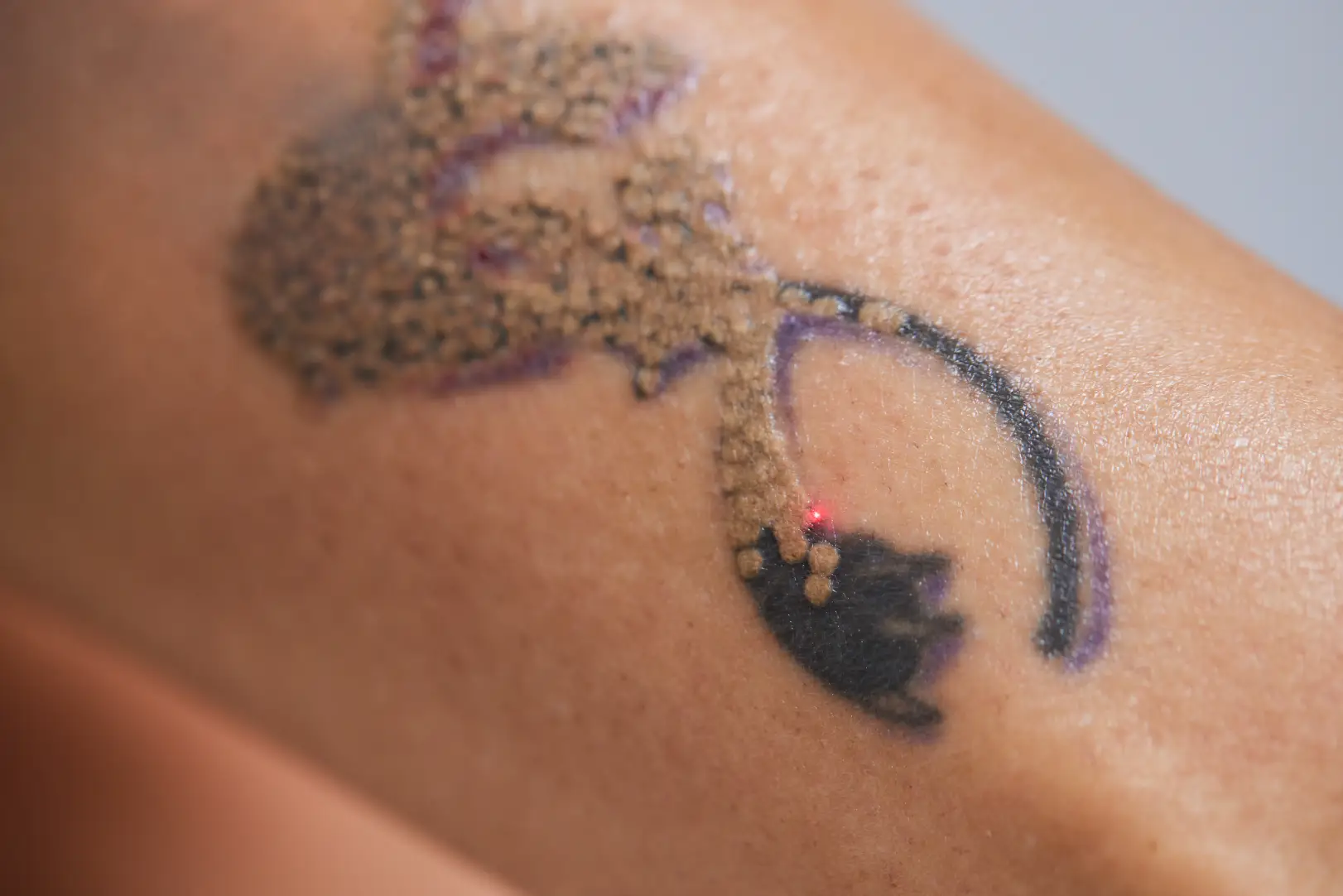
When the ink absorbs sufficient energy, it undergoes rapid physical changes that help break larger pigment particles into smaller fragments. This process is often described as a photoacoustic effect because the rapid energy delivery creates mechanical forces within the pigment.
The goal is to disrupt tattoo ink while limiting unnecessary injury to surrounding tissue. However, laser treatment can still cause skin damage, particularly when inappropriate settings are used.
2. Your Body Helps Clear the Ink
One of the most interesting parts of tattoo removal happens after the laser appointment ends. Once laser energy fragments tattoo pigment, the body’s immune and clearance processes gradually handle some of the smaller particles.
Immune cells called macrophages play an important role in interacting with tattoo pigment. Some fragmented material may be transported through lymphatic pathways, while other particles remain within the skin. This explains why tattoos often continue fading for weeks after treatment.
The laser doesn’t simply vaporize every pigment particle or make the entire tattoo disappear during the appointment. Instead, it initiates changes that allow gradual clearance. The rate of fading varies from person to person.
Tattoo composition, pigment depth, individual immune responses, and treatment parameters can all influence how much ink clears. This gradual process is also why providers generally recommend waiting several weeks between sessions.
3. Different Colors Respond Differently
Tattoo color is one of the biggest factors influencing treatment difficulty. Dark pigments, particularly black ink, often respond well to commonly used tattoo removal wavelengths because they absorb a broad range of light. Colored tattoos can be more complicated.
Green, blue, red, yellow, and other pigments have different light absorption characteristics. Some require specific wavelengths, while others may be particularly resistant to treatment. For example, certain green and blue pigments can be difficult to address with wavelengths commonly used for black ink.
Yellow and some lighter pigments may also respond inconsistently. At Amplify Aesthetics, the Alma Harmony XL Pro platform is used for tattoo removal. Its laser capabilities allow providers to select appropriate treatment approaches for different tattoo characteristics.
However, not every ink color responds equally well, and complete removal cannot be guaranteed. Some cosmetic tattoo pigments may even darken after laser exposure because of chemical changes within the pigment.
A careful assessment is especially important for permanent makeup and unusual ink colors.
4. The Laser Uses Short Energy Pulses
Tattoo removal requires a different laser approach from treatments designed primarily for hair removal or skin resurfacing. Many established tattoo removal systems use Q-switched technology, which delivers high-energy pulses over extremely short durations.
These rapid pulses help create the mechanical effects needed to fragment pigment. The Alma Harmony XL Pro is a multifunction laser platform that can incorporate Q-switched Nd technology for tattoo removal.
Nd systems commonly use a 1064-nanometer wavelength for certain dark pigments, while a frequency-doubled 532-nanometer wavelength may be used for selected red or warm-colored inks. The exact capabilities depend on the handpiece and configuration available.
Providers select treatment parameters according to pigment characteristics, skin tone, tattoo location, and previous treatment response. More energy isn’t automatically better. Excessive energy can increase the risk of blistering, burns, scarring, and unwanted pigment changes.
Effective treatment requires balancing pigment disruption with skin safety.
5. Tattoo Size Influences Appointment Time
A tiny symbol on your wrist and a large tattoo covering your back won’t require the same amount of treatment time. Larger tattoos generally involve more skin surface and more pigment to address. As a result, individual appointments may take longer.
However, size alone doesn’t determine how many sessions will be needed. A small tattoo with dense, deeply placed pigment may prove more stubborn than a larger tattoo with lighter ink. The tattoo’s location also matters.
Areas with different circulation and tissue characteristics may respond differently over time. Providers may also divide very large tattoos into treatment sections rather than addressing the entire design during one appointment. This approach can help manage treatment intensity and recovery.
A consultation allows the provider to evaluate the tattoo’s dimensions and recommend a practical treatment plan.
6. Older Tattoos May Fade More Easily
Tattoo age can influence how the ink responds to laser treatment. Over time, some tattoos naturally lose definition or become lighter as pigment changes and the body gradually processes portions of the ink. That means an older, faded tattoo may sometimes require less treatment than a newer design with dense pigment.
However, age isn’t a reliable predictor by itself. An older professional tattoo with deeply deposited ink may still require numerous sessions. Meanwhile, a newer tattoo with relatively light pigment might respond more quickly. The quality and depth of ink placement also influence treatment.
Professional tattoos are often applied more consistently and densely than amateur tattoos, which can make them more resistant to removal. Rather than relying on tattoo age alone, providers assess the entire design. This includes its color, density, depth, location, and any previous removal attempts.
7. Skin Tone Affects Laser Selection
Successful tattoo removal requires treating the pigment while minimizing unwanted effects on the surrounding skin. This becomes particularly important when the skin contains more natural melanin. Melanin can also absorb laser energy, which may increase the risk of burns or pigment changes when unsuitable wavelengths or settings are used.
For patients with darker skin tones, 1064-nanometer Nd technology is often useful for treating appropriate dark tattoo pigments because it generally interacts less with epidermal melanin than shorter wavelengths. However, darker skin still requires careful treatment planning.
Potential complications include post-inflammatory hyperpigmentation, hypopigmentation, and scarring. Recent tanning, sun exposure, and existing skin conditions may also affect treatment decisions.
Patients considering laser tattoo removal in Camp Hill should look for an individualized assessment rather than a one-size-fits-all treatment plan. The right settings depend on both the tattoo and the skin surrounding it.
8. Fading Happens Gradually
One common misconception is that a tattoo should look dramatically lighter immediately after every appointment. Some patients notice an immediate temporary whitening effect, often called frosting, as the laser interacts with pigment and surrounding tissue.
However, this appearance doesn’t represent the final amount of ink removed. True fading generally develops over the following weeks as the skin heals and the body processes fragmented pigment. Some sessions produce noticeable changes, while others result in more subtle improvements.
The tattoo may also fade unevenly because different pigments or areas respond at different rates. This is normal and doesn’t necessarily mean the treatment has failed. For patients exploring a tattoo fading laser, it’s important to distinguish between temporary post-treatment changes and lasting pigment reduction.
Photographs taken under consistent lighting can help document progress over a treatment series.
How Many Sessions Does Tattoo Removal Take?
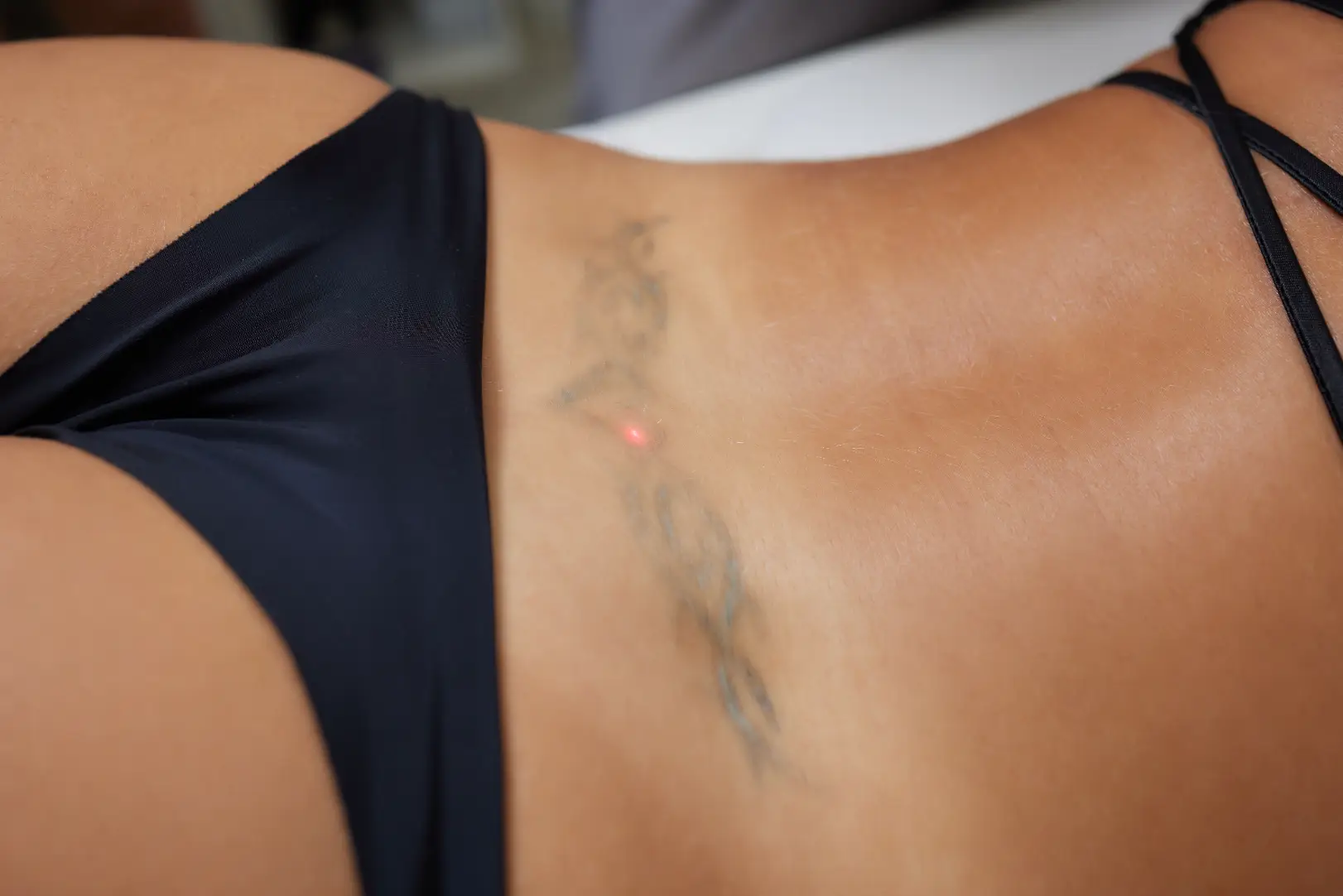
This is usually the first practical question patients ask, and understandably so. Most tattoos require multiple laser sessions for substantial fading. A commonly discussed estimate is approximately 6 to 12 sessions, although some tattoos need fewer and others require considerably more.
There isn’t a universal number that applies to every design. When patients search how many sessions tattoo removal requires, the most useful answer is an individualized estimate based on several factors:
- Ink color: Black ink often responds more predictably than certain green, blue, yellow, or mixed pigments.
- Ink density: Heavily saturated tattoos may require additional treatments.
- Tattoo depth: Deeply deposited pigment can be more difficult to clear.
- Tattoo age: Older, faded designs sometimes respond more readily.
- Skin tone: Treatment settings may need adjustment to reduce pigmentation risks.
- Tattoo location: Different body areas may show different clearance rates.
- Desired result: Fading a tattoo for a cover-up may require fewer sessions than attempting extensive removal.
Even with a careful assessment, the exact number of treatments cannot be predicted with certainty. Some residual pigment may remain despite an extensive treatment series. The goal should be realistic improvement rather than assuming every tattoo can be completely erased.
Your Next Chapter Starts Here
A tattoo may have been the right choice once, but you’re allowed to feel differently about it today. Laser tattoo removal offers a gradual way to reduce unwanted pigment, with results influenced by ink color, tattoo depth, skin characteristics, and the number of sessions completed.
At Amplify Aesthetics in Camp Hill, PA, patients can explore laser tattoo removal using the Alma Harmony XL Pro platform. A personalized consultation can help you understand your tattoo’s characteristics, the treatment process, and what degree of fading may realistically be possible.
Contact us today to book your consultation!